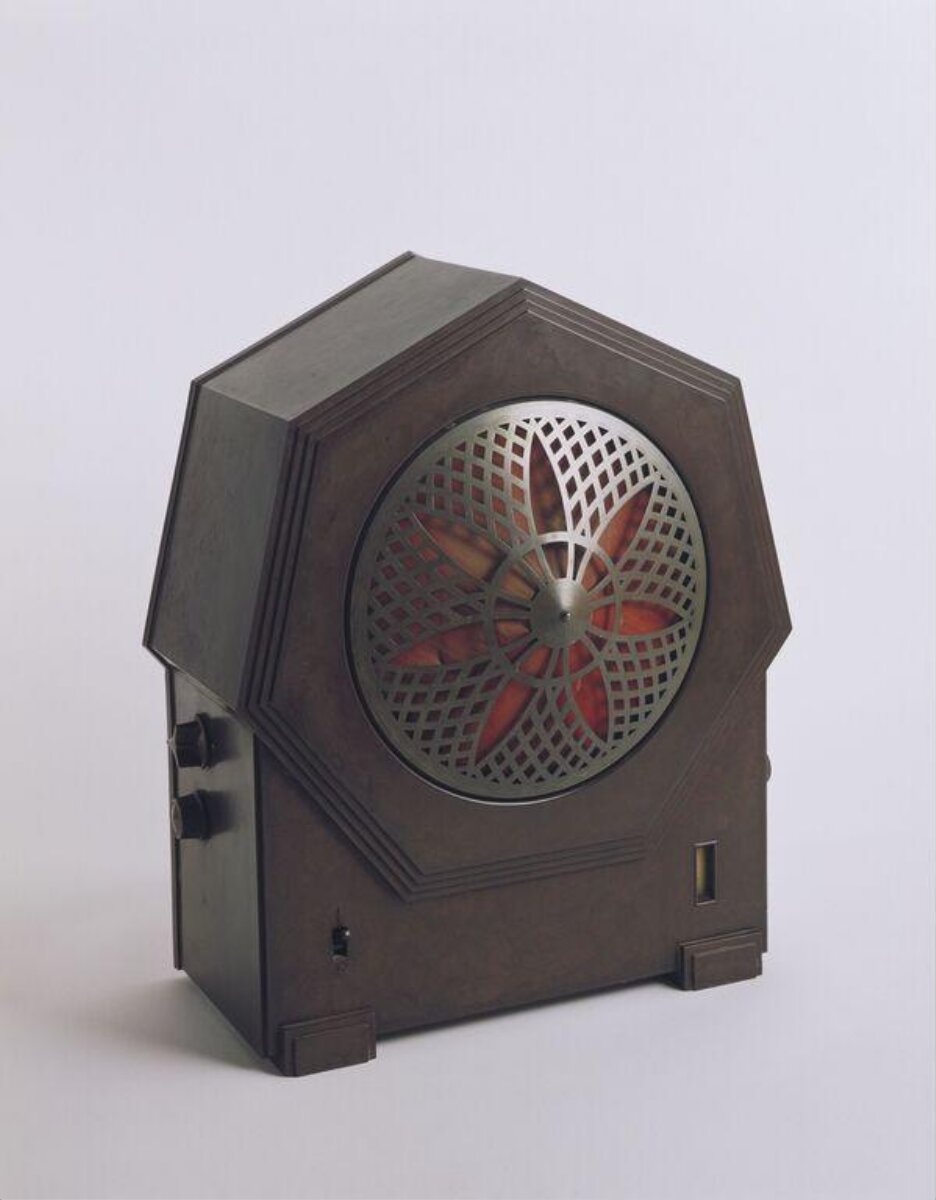
Philips Radioplayer All-Electric model 2634
Radio broadcasting was made possible in the UK in 1920 by Marconi’s experimental radio station in Essex. The station was based in an ex-army hut in Writtle and daily half-hour broadcasts of news and light entertainment were made. Marconi brought together the work of many earlier pioneers to create broadcast radio, including Michael Faraday, James Clark Maxwell and Heinrich Hertz. Radio became a popular form of entertainment through developments such as the founding of the British Broadcasting Company (BBC), the widespread use of short-wave radio in the mid 1920s and an increase in the number of broadcasting stations throughout the country. This is an early example of a mass-produced mains ta
Radio · Netherlands · 1931. Compression-moulded Bakelite (phenol-formaldehyde), oxidised bronze. By Philips. Victoria and Albert Museum, London.