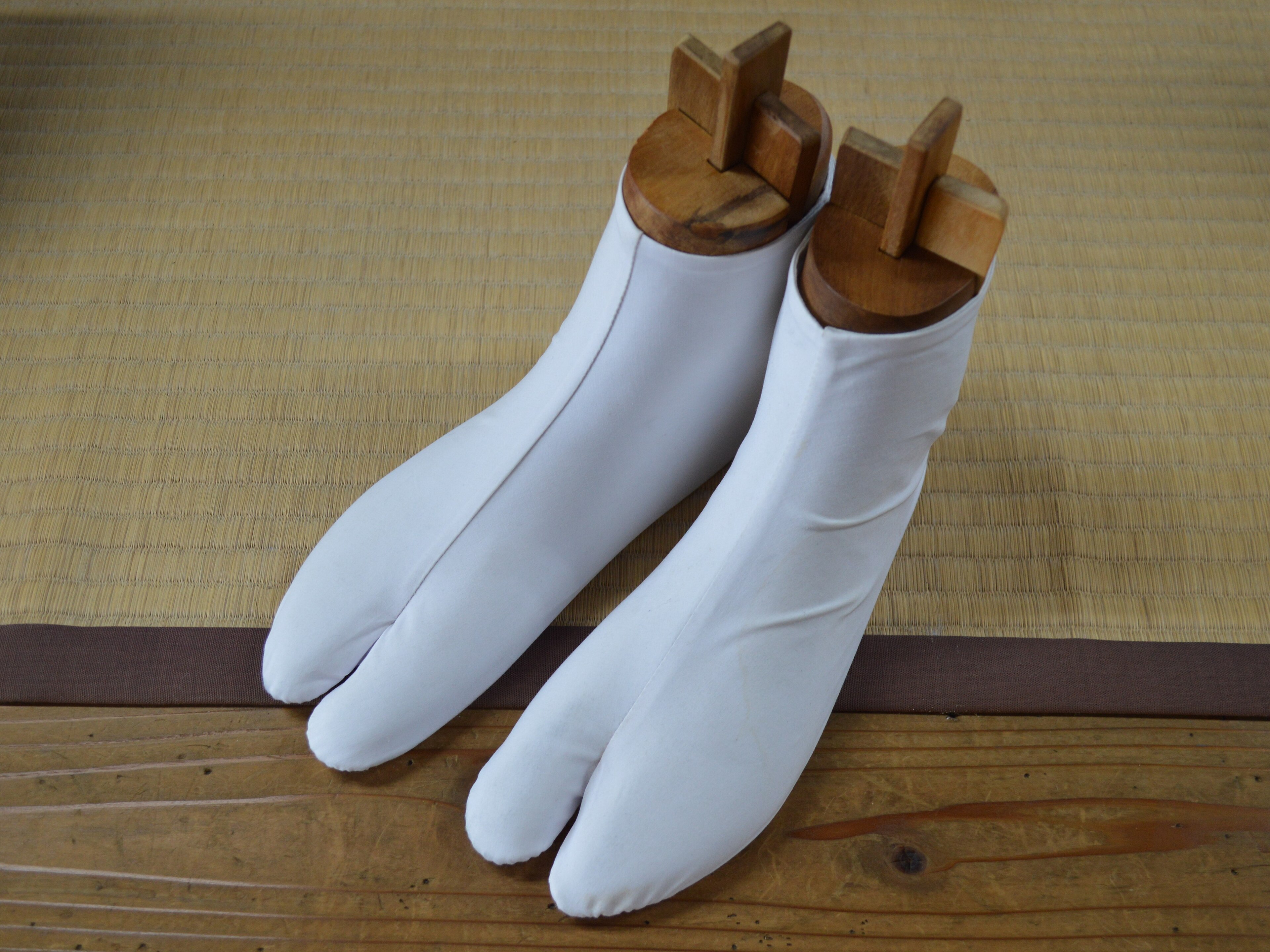
Maison Margiela Tabi Boot
The Garment
Martin Margiela's first collection, 1989. A leather ankle boot with a split toe — lifted directly from the Japanese tabi sock (the traditional split-toed footwear that accommodates thonged sandals). Applied to Western leather boot construction. A cloven hoof, essentially. The first wearers got their shoes tied in string and announced the collection by walking across a wet canvas — footprints were the show's memory.
Design Logic
- The split toe is the only distinguishing feature. Everything else is normal leather boot vocabulary — reasonable heel, reasonable instep, reasonable upper.
- The reference is cultural, not nostalgic — Margiela wasn't making "Japanese" shoes, he was isolating a single structural idea (the bifurcated toe) and testing whether a Western leather version could be read as beautiful.
- Produced continuously since 1989 without meaningful revision. A true archetype — the design is closed.
Why It's In The Canon
The tabi is the argument that conceptual fashion can be as disciplined as Swiss graphic design. One idea. Fully committed. No decorative distractions. Also: a case study in how cultural appropriation becomes reference — Margiela's tabi is understood as Margiela's because he did nothing but isolate the structural idea at enormous cost to wearability. The discipline of the theft was the craft.
Connected To
- Memphis Group — contemporary 1980s rebellion against "good taste" in a different field


