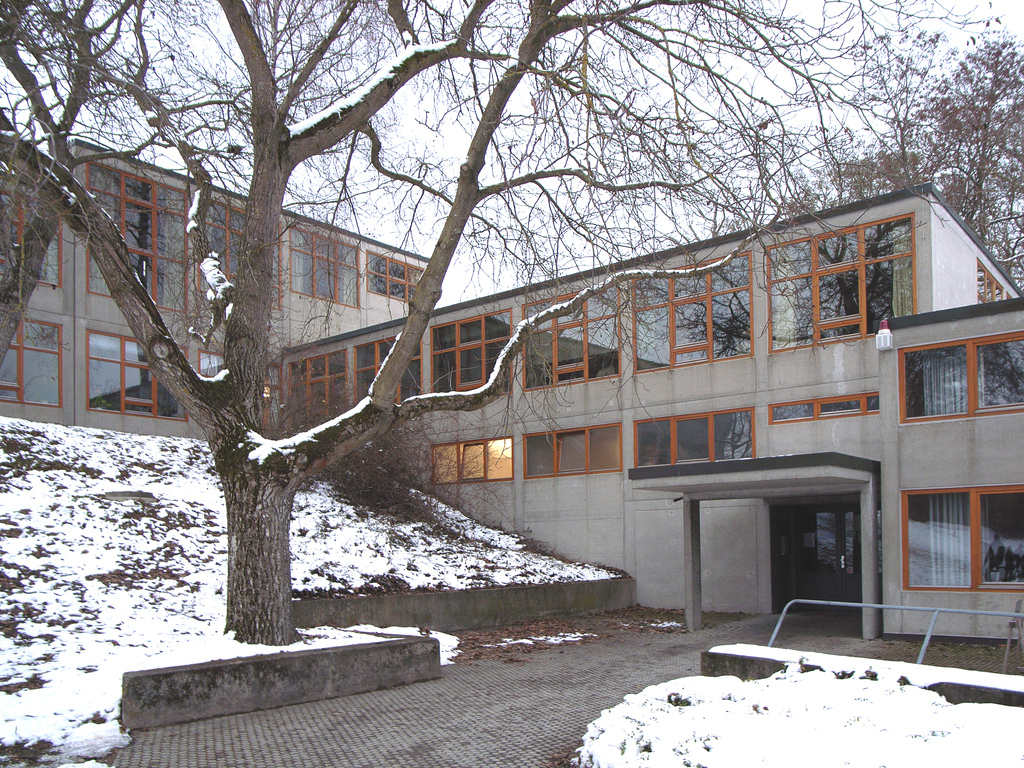
School
1953Ulm HfG (Hochschule für Gestaltung)
The School
Founded in 1953 by Inge Scholl (sister of resistance martyr Sophie Scholl), Otl Aicher, and Max Bill (early Bauhaus student) as a deliberate post-war West German answer: what kind of design school does a country build after fascism? Ulm taught systematic design as ethics — rigorous methodology was a safeguard against the manipulative visual culture that Nazism had weaponized.
Pedagogy
- Four-year program: preliminary course → specialization (product, visual communication, industrial building, information).
- Mathematical and scientific foundations required — statistics, sociology, semiotics.
- Students were expected to publish arguments, not just show work.
- Closed in 1968 when West German state funding was cut, partly because faculty (Maldonado, Aicher) refused to water down the "science of design" position.
Lineage
- Predecessor: Bauhaus — Bill was a direct link, Ulm saw itself as the rigorous continuation.
- Offspring: Braun industrial design (Dieter Rams worked closely with Ulm-trained Hans Gugelot), Lufthansa identity (Aicher), 1972 Munich Olympics identity (Aicher), the entire corporate-identity industry.
Why It's In The Canon
Ulm is the institutional embodiment of the idea that design-as-system is a political position, not just a style preference. Any design system you build today that treats tokens, components, and a rule-book as the deliverable (not the pretty artifact) is doing Ulm work.
Connected To
- Swiss International Style — parallel aesthetic
- Otl Aicher — core faculty


